7 Signs Your Leeds Roof Is Overdue a Clean
Most people in Leeds never really look at their roof until something goes wrong. It's up there, out of sight, quietly weathering everything the Yorkshire sky throws at it. By the time you notice a problem, it's usually been building for a while.
The good news is your roof gives off warning signs long before a small issue turns into a leak or a repair bill. Learn to spot them and you can act while a clean still does the job. Here are seven signs your Leeds roof is overdue some attention.
The quick answer: Your Leeds roof needs cleaning when you see moss clumps in the gutters, green or black streaks down the slates, dark damp patches that never dry, plant growth on the roof, water spilling over the gutters, grit washing down, or damp appearing on upstairs ceilings.
1. Moss Clumps Falling Into the Gutters
This is usually the first thing people notice. You're clearing the gutters, or you spot debris on the ground, and there are spongy green lumps of moss that have dropped off the roof. If moss is falling in chunks, there's a thick layer of it up there.
Those clumps do more than look messy. They wash down and block the gutters, which backs water up under the slates and against your walls. In the damp Leeds climate, moss builds fast, so clumps in the gutter mean it's time for a proper clean, not just a gutter clear-out.
2. Green or Black Streaks Down the Slates
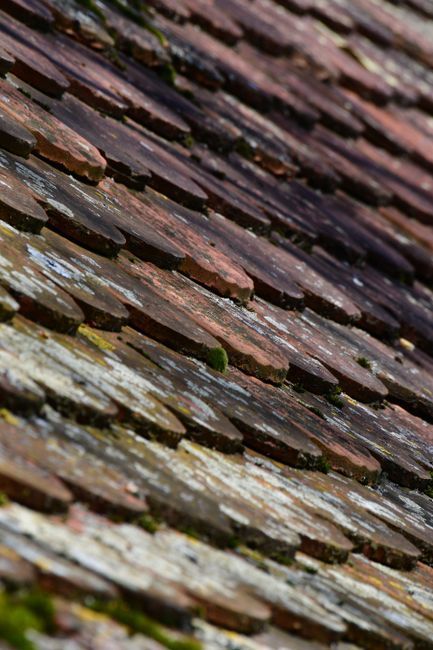
Stand across the street and look up. Dark green streaks are moss and algae spreading down from the ridge. Black or grey streaks are usually algae, common on the shaded slopes that so many Leeds terraces have.
Streaking means growth has taken hold and is working its way across the roof. It won't stop on its own. Left alone, it thickens into the kind of layer that holds damp against the slate and speeds up wear, especially through a wet West Yorkshire winter.
3. Patches That Stay Dark and Damp
After a dry spell, most of the roof lightens as it dries out. If certain patches stay dark and wet-looking while the rest has dried, that's a warning. Those areas are holding moisture, usually because moss or algae is trapping it against the surface.
Constant damp is what wears a roof down. It works into tiny gaps, and when a Leeds frost hits, that trapped water freezes and cracks the slate. Persistent dark patches are a sign the roof needs cleaning before the cold sets in.
4. Actual Plants Growing on the Roof
When moss gets thick enough, it becomes a seedbed. Wind and birds drop seeds, and before long you've got grass, weeds, or even small sapling roots taking hold in the muck on your roof and in the gutters.
Plants growing up there mean the moss and debris layer is deep and holding a lot of water. Roots work into gaps and lift slates. If you can see greenery that isn't moss on your roofline, the clean is well overdue.
5. Water Spilling Over the Gutter Edges
Next time it rains hard, look at your gutters. Water should run to the downpipe and away. If it's sheeting over the front edge or gushing from the joints, the gutters are blocked, and moss and roof debris are the usual culprit in Leeds.
Overflowing gutters send water straight down your walls, which leads to damp inside and eventually rot in the timbers. It also points to a roof shedding moss and grit into the guttering. Both need dealing with together.
6. Grit and Slate Bits Washing Down
Find gritty, sandy sediment in the gutters or by the downpipe outlet? On a slate roof, that's often fine particles of the slate surface breaking down, sped up by heavy moss holding damp against it.
A bit of sediment over years is normal ageing. A noticeable build-up, especially alongside heavy moss, says the roof surface is deteriorating faster than it should. A clean and treatment slows that decline and protects the slate you've got.
7. Damp Patches on Your Upstairs Ceilings
This is the sign you never want to ignore. A yellowish stain or damp patch on a bedroom or landing ceiling means water is getting through the roof. Heavy moss lifting slate edges, or blocked gutters forcing water back, are common causes in older Leeds homes.
Once water is inside, every wet spell makes it worse and the repair grows. If you spot interior damp, get the roof looked at quickly. Catching it early can mean the difference between a clean with minor repairs and a much bigger job.
Keep a quick mental checklist when you glance up at your roof:
- Gutters: moss clumps, overflowing water, or sagging under the weight of debris.
- Slate colour: green or black streaks and patches that stay dark after dry weather.
- Growth: thick moss or actual plants rooting in the muck.
- Ground level: grit, slate bits, or moss chunks by the downpipe.
- Indoors: any damp patch or stain on an upstairs ceiling.
Frequently Asked Questions
How often should a Leeds roof be cleaned?
Every two to three years suits most homes here. Shaded, north-facing, or tree-covered roofs grow moss faster and may need attention sooner. A yearly glance tells you where yours stands.
Can I just clear the gutters and leave the roof?
Clearing gutters helps, but if moss is dropping into them from above, it'll clog again within months. Cleaning the roof deals with the source rather than the symptom.
Is moss really that big a deal on a roof?
Yes. It holds water against the slate, and in a Leeds frost that water freezes and cracks the surface. It also blocks gutters and lifts slate edges, letting water in.
Should I try to clean the roof myself?
It's not worth the risk. Terraced roofs are high and steep, wet slate is slippery, and scrubbing damages the surface. Professional soft washing is safer and kinder to the roof.
How quickly should I act if I see interior damp?
Soon. Interior damp means water is already getting in, and it only gets worse with each wet spell. Getting the roof checked quickly keeps the repair small.
Spotted a few of these signs on your own roof?
Ben's Roof Cleaning cleans roofs and clears gutters across Leeds and West Yorkshire, with over 15 years of experience. Get in touch or call 0113 487 0308
for a free, no-obligation quote.
Catch It Early and Save Yourself the Bigger Bill
None of these signs fixes itself. Moss spreads, gutters clog, and damp works its way in given enough Leeds rain. But every one of them is easy to spot from the ground if you know what to look for. Glance up at your roof now and then, act when you see the early warnings, and you'll keep your roof sound for far less than it costs to put right a problem you let run.