Giving Your Leeds Roof a Spring Check After Winter
You don't think much about your roof until winter has finished with it. By the time spring comes round in Leeds, your slates have sat through months of frost, wind rolling off the Pennines, and that steady Aire valley damp that never really lifts. All of that leaves its mark up top, whether you can see it from the pavement or not.
A quick spring check catches the small stuff before it grows into a leak over the kitchen. On the older terraces around Armley or Harehills, one slipped slate can let water track into the loft for weeks before a brown patch ever shows on your ceiling. Ten minutes with your eyes on the roof now can save you a far bigger bill by summer.
The quick answer: Walk round the house on a dry spring morning, look for slipped or cracked slates, moss build-up, and blocked gutters, check the loft for damp, and book a proper clean if the moss has taken hold.
1. Start With the View From the Ground
Before you touch a ladder, just stand back and look. Cross the road, or walk to the far end of the yard, and give the whole roof a slow scan on a bright day. Most problems show up as something that looks out of place, a dark clump of moss, a slate sitting at the wrong angle, or a line of green running down from a valley.
Terraces in places like Kirkstall and Chapel Allerton often share long roof runs, so it helps to look at next door too. If your neighbour's slates look tidy and yours have gone dark and patchy, that tells you something. Bring your phone and zoom in on anything odd so you can study it properly without climbing up.
2. Check the Gutters and Downpipes
Winter fills gutters with all sorts, dead leaves, grit washed off the slates, and lumps of moss that have let go in the frost. When you get a heavy spring shower, watch what the gutters do. Water spilling over the front edge or running down the brickwork means there's a blockage sitting somewhere along the run.
Downpipes matter just as much. On a lot of Leeds back-to-backs the rainwater has nowhere to go but straight down the wall if a pipe is choked, and that damp soaks into old brick fast. A gutter that stays wet and heavy through spring will start pulling away from its brackets, so clearing it early is worth the effort.
3. Look for Slipped or Cracked Slates
Welsh slate covers most of the older housing stock here, and it lasts a hundred years or more when it's looked after. The weak point is usually the nail, not the slate itself. Freeze and thaw over winter loosens the fixings, and a slate that has crept down even an inch leaves a gap for rain to get behind.
Look along the ridges and around the chimney where slates take the most weather. A cracked slate can be hard to spot from the ground, but a missing one leaves an obvious dark rectangle. Note where any gaps are and roughly how many, because that decides whether it's a quick repair or a bigger job for a roofer.
4. Find the Moss Before It Spreads
Moss loves a Leeds roof. The damp air, the shade thrown by tall terraces, and all those north-facing slopes give it exactly what it wants. After winter you'll often find it thickest along the bottom edge of the slates and in the shaded valleys, where the sun barely reaches.
The trouble with moss is that it holds water against the slate and works into the gaps, so it keeps the roof wet long after the rain stops. Left alone through another year it spreads across the whole slope and starts shedding lumps into the gutters. Spring is the right time to deal with it, before the growing season really gets going.
5. Head Into the Loft
Some of the best clues are on the inside. Pick a dry day, take a torch up into the loft, and look at the underside of the roof and the timbers. Daylight coming through where it shouldn't means a gap in the slates. Dark staining on the rafters or damp felt points to water getting in.
Give it a sniff too. That musty, earthy smell is a sign of damp that has been sitting a while, which is common in the older lofts around Headingley where insulation was added years after the house went up. Anything you find inside helps you match a leak to the spot you saw from the ground.
6. Decide What Needs a Pro
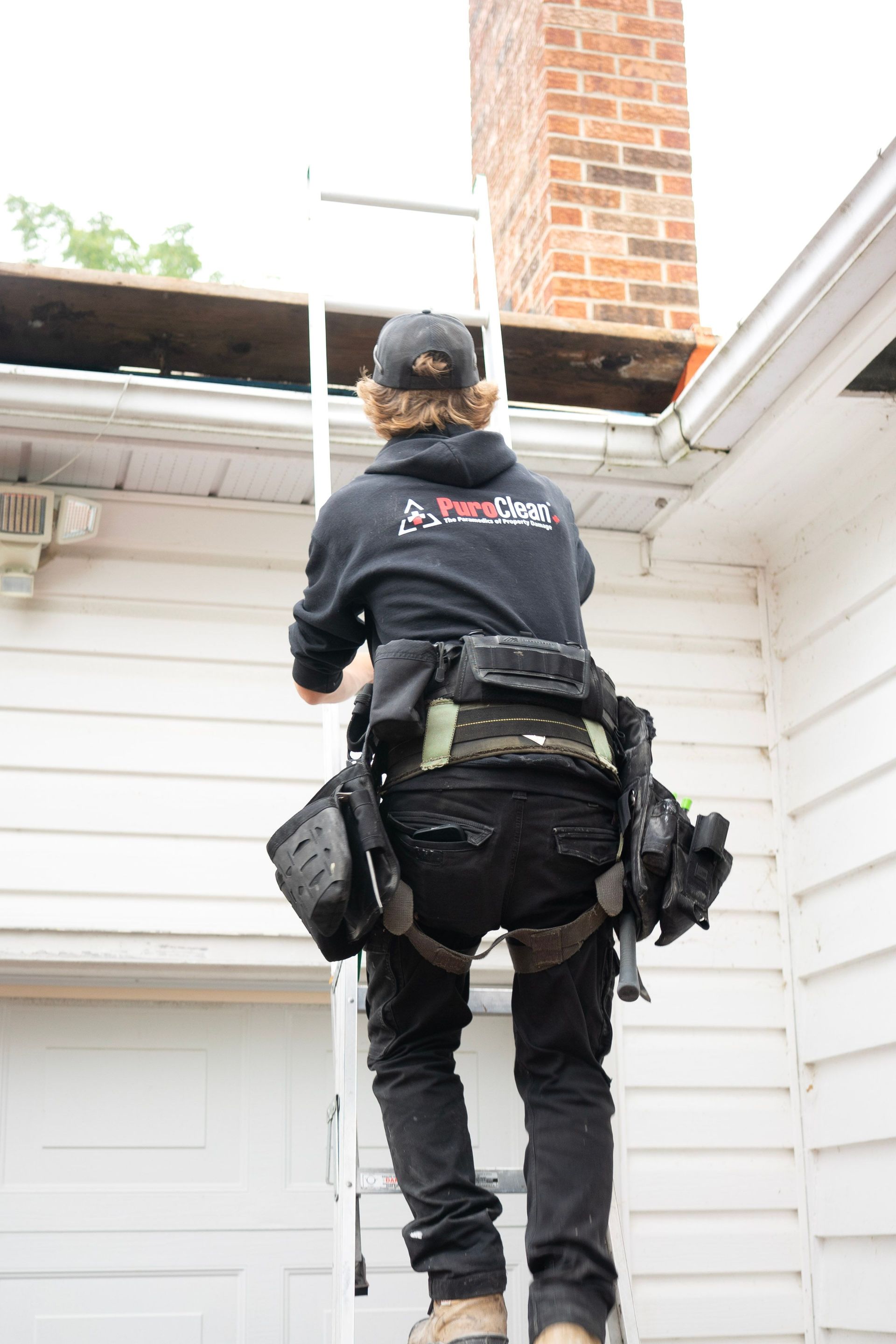
Plenty of the spring check you can do yourself from the ground with a torch and a bit of patience. Clearing a light scatter of leaves from a low gutter is fair enough if you're steady and the ladder is safe. The line to draw is anything that puts you on the roof itself or up high over a hard yard.
Moss removal, a full gutter clear on a three-storey terrace, or sorting slipped slates on a steep pitch are jobs for someone with the right kit and access. A proper soft wash, which is low-pressure water paired with a biocide treatment, lifts moss without battering the slate the way a pressure washer would. If the roof has gone green all over, that's the point to bring someone in.
- Slipped slates: Note their position and count so a roofer can quote without a second visit.
- Moss depth: A light green film is one thing, thick spongy clumps along the eaves are another and need proper removal.
- Gutter flow: Watch them in a shower, overflow means a blockage that will damage the wall below.
- Loft signs: Damp stains, daylight, or a musty smell all point to water getting past the slates.
- Access: Steep pitches, three storeys, and hard yards are reasons to step back and call a pro.
Frequently Asked Questions
When is the best time for a spring roof check in Leeds?
A dry morning in March or April is ideal. The worst of the frosts have passed, so any winter damage has already shown itself, and you've got time to sort problems before the wetter months return.
Can I check the roof myself or do I need a professional?
Most of it you can do from the ground with a torch and your phone camera. You only need a professional once the job means getting on the roof, clearing high gutters, or removing moss that has spread across the slates.
How do I know if moss is a real problem or just cosmetic?
A thin green tint on shaded slates is mostly cosmetic. Thick, spongy clumps that hold water and drop into the gutters are the ones that shorten a roof's life and need dealing with.
Why do Leeds roofs seem worse after winter?
The combination of Pennine wind, repeated freeze and thaw, and constant Aire valley damp is hard on slate and its fixings. Winter loosens nails and feeds moss growth, so spring is when the damage becomes visible.
Is it worth cleaning the roof every spring?
Not always a full clean, but a look every spring is worth it. A proper moss removal and gutter clear every few years, guided by what your yearly check turns up, keeps the roof sound for far longer.
Roof looking rough after winter?
Ben's Roof Cleaning handles roof cleaning, moss removal, and gutter cleaning across Leeds and West Yorkshire, with over 15 years of experience. Get in touch or call 0113 487 0308
for a free, no-obligation quote.
A Ten-Minute Look Now Beats a Big Bill Later
Your roof takes a beating every Leeds winter, and the damage rarely announces itself until water is already inside. A calm walk round in spring, a torch in the loft, and an honest look at the moss tells you almost everything you need to know. Sort the small things early, bring in help for the rest, and your slate will keep doing its job for decades more.