What Happens During a Soft Wash, Step by Step
You've booked a roof clean, and now you're wondering what the crew is actually going to do up there. If the word soft wash has come up and you're not sure how it differs from someone blasting the slates with a jet washer, you're asking the right question. The method matters a lot on a Leeds roof.
Most homes here wear Welsh slate that has been in place for a century, and it does not take kindly to high pressure. A soft wash is built around that fact. It cleans gently, works with a treatment rather than brute force, and leaves the slate sound. Here's how the whole thing goes from start to finish.
The quick answer: A soft wash means clearing loose moss by hand, rinsing the roof with low-pressure water, and applying a biocide treatment that kills off the remaining growth over the following weeks, all without the force that cracks old slate.
1. Why Soft Washing and Not a Pressure Washer
It's worth understanding the why before the how. A pressure washer throws water hard enough to strip the surface off a slate, force water up under the laps, and knock the granules off a concrete tile. On the old terraces in Armley or Beeston, that kind of force turns a tired but sound roof into a leaking one.
Soft washing flips the approach. The cleaning power comes from the treatment, not the water pressure, so the slate is never stressed. You get a roof that clears up properly and stays intact, which is exactly what you want on housing stock that was built to last but only if it's handled with care.
2. The Survey and Setting Up
Nothing starts until the roof has been looked over. The first job on the day is a proper survey, checking the pitch, the state of the slates, where the moss is thickest, and how bad the gutters are. This is also when any cracked or slipped slates get flagged, because there's no sense cleaning over a fault that needs a repair.
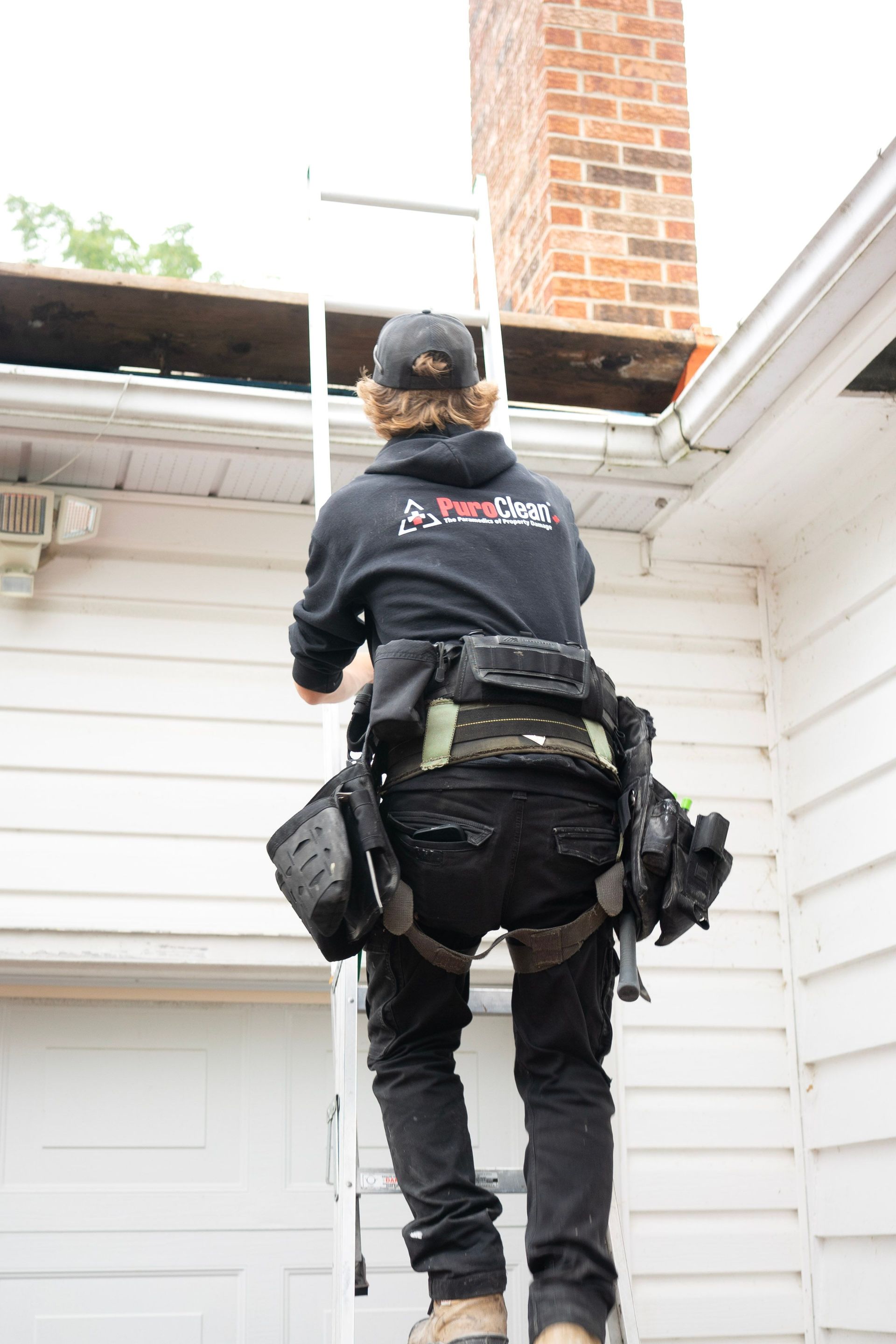
Setting up takes a bit of time and that's a good sign. Access matters on Leeds terraces, where a lot of the work happens over a narrow yard or a shared ginnel. Ladders get secured, ground sheets go down to protect plants and paving, and the team works out the safest way to reach every slope before a drop of water touches the roof.
3. Clearing the Loose Moss by Hand
The heavy moss comes off first, and it comes off by hand or with a scraper, not with a machine. After a few damp Leeds winters, moss can build into thick spongy mats along the bottom edge of the slates and in the shaded valleys. That bulk needs lifting away before anything else happens.
This step is slow and a little tedious, which is why some cut corners on it. Done properly, the loose growth is worked off gently so the slate underneath isn't scratched, and it's cleared straight into bags rather than left to wash into the gutters. A roof around Kirkstall that has gone years without attention can shed a surprising amount at this stage.
4. The Low-Pressure Rinse
With the bulk gone, the roof gets a rinse with low-pressure water. This is where people expect the loud jet washer and are surprised by how gentle it looks. The flow is more like a firm garden hose than a pressure lance, and that's the point. It washes off the loosened material without driving water where it shouldn't go.
The rinse also shows what's left behind, the staining and the finer growth that's rooted into the surface. You won't see a bright, like-new roof at this stage, and that's normal. On a north-facing Chapel Allerton slope that barely sees the sun, some discolouration stays until the treatment has had time to work.
5. Applying the Biocide Treatment
Now the part that does the real work. A biocide treatment is applied across the whole roof, and this is what kills off the remaining moss, algae, and lichen at the root. It goes on gently and is left in place rather than rinsed off, so it keeps working long after the crew has packed up.
The change is gradual, not instant. Over the following weeks the treated growth dies back, dries out, and weathers away in the wind and rain, which Leeds provides plenty of. By the time a couple of months have passed, the roof looks far cleaner than it did on the day, and it stays that way for much longer than a quick blast ever would.
6. The Clean-Up and What Comes Next
A good job ends with a proper tidy. The moss and debris that came off the roof gets bagged and taken away, the gutters get checked and cleared of anything that fell during the work, and the ground sheets come up so your yard looks as it did before. You should not be left with a pile of dead moss to deal with yourself.
After that, it's mostly a case of letting the treatment do its thing. You might get a few tips on keeping the roof clear, like sorting overhanging branches that drip onto the slates. In the damp Aire valley air, a soft wash every few years keeps moss from ever getting the upper hand again.
- Survey first: The roof is checked for faults and moss depth before any cleaning starts.
- Hand clearing: Thick moss is lifted off by hand, not blasted, to protect the slate.
- Low pressure only: The rinse uses a gentle flow that won't force water under the laps.
- Biocide does the work: The treatment kills growth at the root and keeps working for weeks.
- Full clean-up: Debris is bagged and removed, and gutters are cleared before the team leaves.
Frequently Asked Questions
How long does a soft wash take?
Most homes are done in a day. A larger or heavily overgrown roof, or a tricky three-storey terrace with awkward access, can run longer, but a typical Leeds semi or terrace is usually a single visit.
Will my roof look clean straight away?
Not fully. The bulk of the moss is gone on the day, but the biocide treatment works over the following weeks, so the roof keeps improving and looks its best a month or two later.
Is soft washing safe for old Welsh slate?
Yes, and that's the whole reason it's used. The low pressure and treatment-led approach clean the slate without the force that cracks tiles or forces water under the laps.
Does the biocide harm plants or pets?
A responsible crew protects borders and paving with sheets and applies the treatment carefully. Once it has dried and weathered, it poses no ongoing issue for the garden below.
How often should a roof be soft washed?
Every few years suits most Leeds homes, given the damp climate. North-facing and shaded roofs that grow moss quickly may want it a little sooner, which a survey can tell you.
Thinking about a soft wash for your roof?
Ben's Roof Cleaning handles roof cleaning, moss removal, and gutter cleaning across Leeds and West Yorkshire, with over 15 years of experience. Get in touch or call 0113 487 0308
for a free, no-obligation quote.
Gentle Cleaning Is What Keeps Old Slate Sound
A soft wash is not the quickest way to clean a roof, and it isn't meant to be. It's the way that respects the century-old slate over your head, clears the moss for good rather than for a season, and leaves the tiles as sound as it found them. Once you've seen the steps laid out, it's easy to understand why it's the right call for a Leeds home.