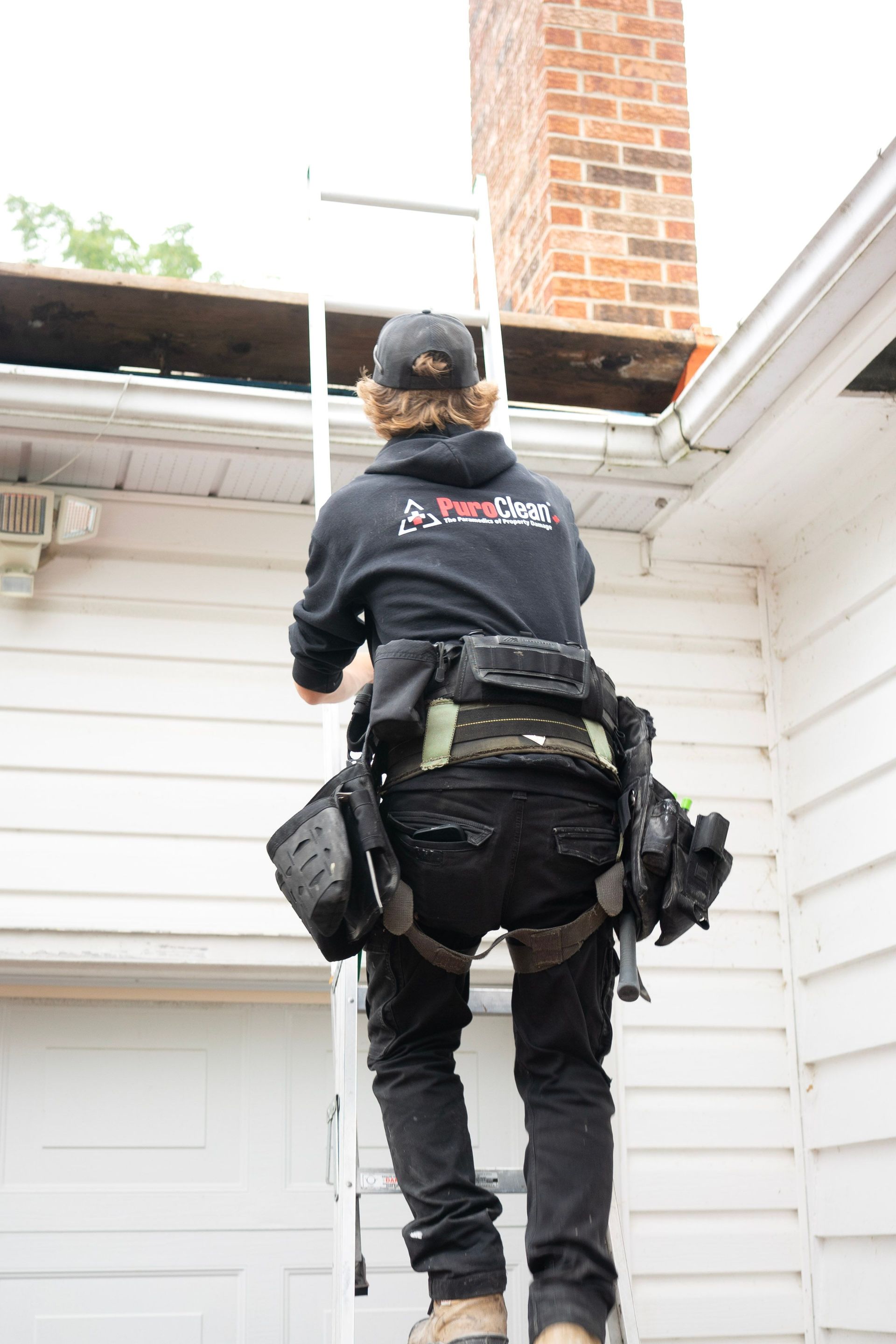
How Blocked Gutters Lead to Damp Walls
You spot a damp patch on an inside wall, and your first thought is a leaking pipe or a roof problem. Very often, though, the real culprit is sitting in plain sight outside: a blocked gutter that has been overflowing every time it rains. It's one of the most common causes of damp in Leeds homes, and one of the easiest to prevent.
The frustrating part is how quietly it happens. A gutter clogs, water pours down the wall instead of away from it, and the brick soaks it up week after week until the damp finally shows inside. By then you're dealing with spoiled plaster rather than a five-minute clear. Here's exactly how that chain of damage plays out.
The quick answer: A blocked gutter forces rainwater to spill down the outside wall, which saturates the brickwork until moisture tracks through to the inside, showing up as damp patches, mould, and spoiled plaster.

1. What a Gutter Is Actually For
It's easy to forget how much work a gutter does. Every drop of rain that lands on your roof runs down to the eaves, and the gutter's whole job is to catch that water and send it to a downpipe, away from the walls and the foundations. On a wet Leeds day that's a lot of water moving off the roof.
When the system works, the wall below stays dry and the water disappears down the drain without you ever noticing. The gutter is only doing its job when nothing dramatic happens. That's why a blockage goes unseen for so long, because the failure is quiet until the damage is done.
2. How a Blockage Starts
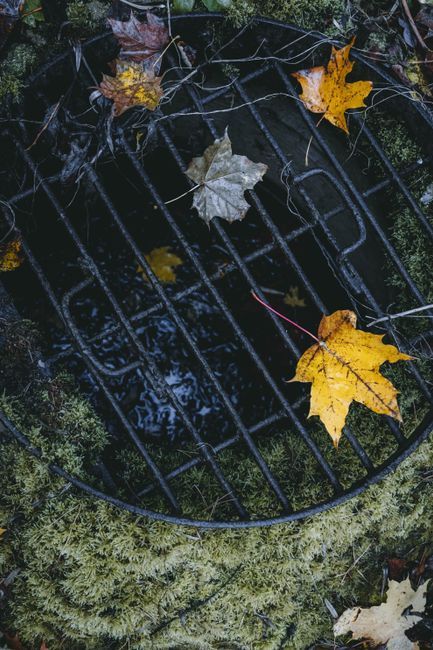
Most blockages build up slowly from the usual suspects. Leaves in autumn, grit and moss washing off the slates, windblown seeds, and the odd bit of nesting material all collect in the channel. On the older terraces around Kirkstall or Armley, where mature trees line a lot of streets, leaf fall alone can choke a gutter in a single season.
Moss is a big contributor here. A roof that grows moss sheds it into the gutter, where it packs down into a wet, heavy mass that water can't get past. The blockage usually forms near the downpipe outlet first, then backs up along the run until the whole gutter is holding standing water.
3. Where the Water Goes Instead
Water always finds the lowest way down. Once the gutter is full and can't drain, the next heavy shower has nowhere to go but over the front lip, and it sheets straight down the wall below. You'll sometimes see the tell-tale stripe of a darker, wet section of brickwork right under the blocked spot.
That constant wetting is the problem. Brick and the old lime mortar between it are porous, so they drink up the water that keeps running over them. On a north-facing wall that barely sees the sun, the brick never gets a chance to dry out between downpours, and the damp works its way deeper.
4. From Wet Brick to Damp Inside
Once the outside wall is saturated, it's only a matter of time before you see it inside. Moisture moves through the wall and shows up as a damp patch, often on an upstairs wall or where the ceiling meets the wall. It can bring peeling paint, blown plaster, and that musty smell that tells you it's been there a while.
Then mould follows the damp. A wall that stays wet grows black mould in the corners and behind furniture, which is bad for the room and worse for anyone with a chest complaint. Plenty of the persistent damp in older Leeds housing traces straight back to a gutter that has been overflowing for a couple of winters.
5. The Leeds Weather Factor
Geography stacks the odds here. Leeds sits in the Aire valley, which holds damp, and it takes the brunt of wet fronts rolling in off the Pennines. That means more rain, more often, and fewer dry spells for walls to recover, so a blocked gutter does its damage faster than it would in a drier part of the country.
Winter adds another twist. Water trapped in a blocked gutter freezes, expands, and can crack the gutter or pull it away from the fascia, turning a clogged gutter into a broken one. The freeze and thaw that works on Leeds roofs works on the guttering too, so a blockage left over winter often becomes a bigger repair by spring.
6. Keeping Gutters Clear
The fix is refreshingly simple: keep the gutters clear so the water can do what it's meant to. A clear-out once or twice a year, timed after the autumn leaves have dropped, stops the vast majority of this trouble before it starts. It's cheap next to fixing damp walls and redecorating rooms.
Tackling the moss on the roof helps at the same time, since less moss means less debris washing into the gutters. Doing it safely matters, though. A three-storey terrace or an awkward back wall over a hard yard is no place for a wobbly ladder, which is where getting someone with the right access pays off.
- The cause: A blocked gutter overflows and sends rainwater straight down the wall.
- The build-up: Leaves, grit, and shed moss pack down near the downpipe and back up the run.
- The soak: Porous brick and old mortar absorb the constant water, especially on shaded walls.
- The result: Damp patches, blown plaster, and mould appear on the inside wall.
- The fix: Clear gutters once or twice a year and keep roof moss in check.
Frequently Asked Questions
How do I know if a damp patch is from a gutter?
Check outside during rain. If water is spilling over the gutter above the damp patch, or the brickwork below it is darker and wet, a blocked gutter is the likely cause rather than a plumbing leak.
How quickly can a blocked gutter cause damp?
Faster than most people expect in Leeds. With frequent rain and few dry spells, a wall can stay saturated through a wet autumn and show damp inside within a season or two.
Will clearing the gutter fix the damp on its own?
It stops the source, which is the important first step. The wall then needs time to dry out, and any spoiled plaster or mould inside may still need attention once it's no longer being fed.
How often should I clear my gutters?
Once or twice a year suits most homes, ideally after autumn leaf fall. Houses under trees or with a mossy roof shedding debris may need clearing more often.
Can moss on the roof block my gutters?
Yes, and it's a common cause. A mossy roof constantly sheds material into the gutter, where it packs down and blocks the flow, so dealing with the moss reduces the problem at its source.
Worried a gutter is causing damp?
Ben's Roof Cleaning handles roof cleaning, moss removal, and gutter cleaning across Leeds and West Yorkshire, with over 15 years of experience. Get in touch or call 0113 487 0308
for a free, no-obligation quote.
A Clear Gutter Is the Cheapest Damp Prevention There Is
The path from a clogged gutter to a damp wall is short and predictable, and the whole thing turns on water that can't get away. Keep the gutters flowing and the roof free of heavy moss, and you cut off the problem before the brick ever gets wet. In a city as damp as Leeds, that small bit of upkeep saves you a lot of grief inside.